About the Book
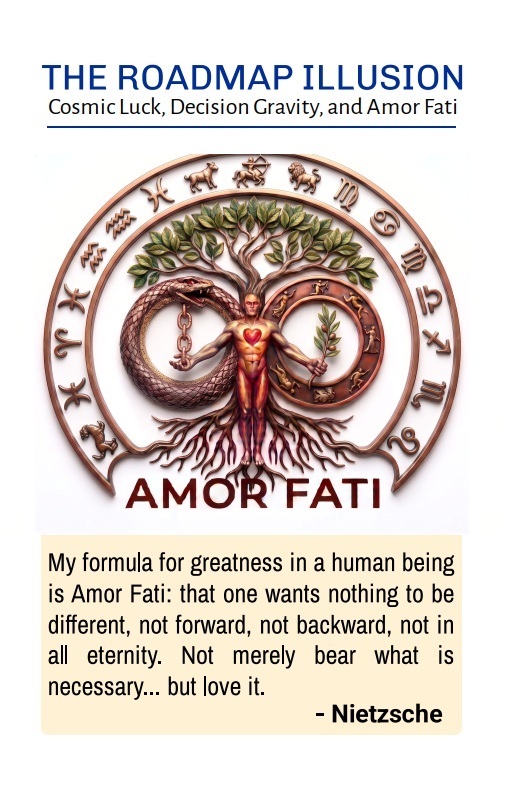
At its most fundamental level, human existence is an unbroken sequence of binary executions governed by the mathematical weight of Combinatorial Gravity. The Optimization Divergence decompiles the architecture of human decision-making by contrasting the localized, ego-driven categorization of the Strict Binary Tree against the overarching, asymmetrical probabilities of a Weighted Directed Acyclic Graph (Weighted DAG). By analyzing the human processor's constraints—specifically its 20-watt energy limit, reliance on survival heuristics, temporal blindness, and vulnerability to the infinite Memory Leaks of resentment and Loss Aversion—this book demonstrates that the concept of objective choice is frequently a cognitive illusion.
Utilizing the literary diagnostics of Hugo, Dostoevsky, Eliot, and De Musset, alongside the philosophical frameworks of Epictetus, Schopenhauer, Sartre, and Camus, this work audits the failure modes of the human trajectory. It reveals how the mind is ultimately blinded by the Formicidae Parallax and Zeno's Paradox of Luck, agonizing over unlived "Phantom Branches" while remaining tragically numb to the transfinite cosmic and evolutionary miracles that forged the present node. Surviving this matrix requires operating as an Air-Gapped Processor and executing a complete administrative override of the ego, culminating in the Nietzschean synthesis of Amor Fati: the profound, unapologetic love for the unique cryptographic signature of our own lives.